
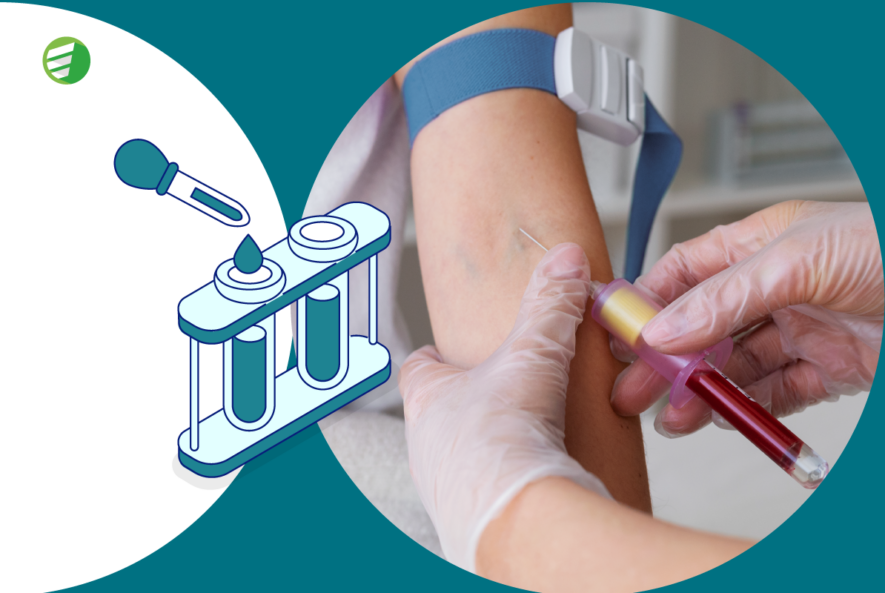
Blood is a vital component of the human body, composed of a liquid part (plasma) and solid elements (blood cells). Its circulation through veins, arteries, and capillaries ensures the transport of oxygen and essential nutrients to organs and tissues. It also performs the crucial task of collecting waste products, such as carbon dioxide, for elimination from the body.
Given its importance in numerous physiological processes, blood acts as a key indicator of the overall state of the human body. Blood tests provide detailed information about the functioning of vital organs such as the heart, kidneys, and liver. To this end, a complete blood count is often used, an essential test for identifying changes in blood composition and preventing disease.
What is a complete blood count?
A complete blood count (CBC) is a clinical test that evaluates the cellular components of blood: red blood cells, white blood cells, and platelets. This analysis allows for the identification of abnormalities that could be signs of disease before they manifest.
A complete blood count, also known as a CBC, measures various blood parameters, including:
Red blood cell count:
Red blood cells are responsible for transporting oxygen from the lungs to the entire body, thanks to hemoglobin. Normal red blood cell levels are:
- Men: 4.7 to 6.1 million cells/µl.
- Women: 4.2 to 5.4 million cells/µl.
A low amount may be due to:
- Anemia: It can be caused by iron deficiency, vitamin deficiency, autoimmune disorders, or problems with blood cell production.
- Blood loss: Due to internal injuries or medical conditions such as ulcers or cancer.
- Bone marrow problems: Related to radiation, toxins, or tumors.
White blood cell count:
White blood cells are essential for defending the body against infections, as they form part of the immune system and help eliminate waste and dead cells. Normal levels are between 4,500 and 11,000 cells/µl. These include:
- Neutrophils: Initial defenders against infections, they represent 62% of white blood cells.
- Lymphocytes: They include B and T cells, which are crucial for immunity and make up 30%.
- Monocytes, basophils, and eosinophils: Each with specific functions such as inflammatory response or fighting parasites.
Hemoglobin:
Hemoglobin is a protein found in red blood cells that carries oxygen. Normal levels are:
- Men: 13,8 a 17,2 g/dL.
- Women: 12,1 a 15,1 g/dL.
Low hemoglobin may indicate anemia, while high levels could be associated with chronic lung disease or heart problems, among other conditions.
Hematocrit:
Hematocrit measures the percentage of red blood cells in relation to total blood volume. Normal values are:
- Men: 41-53 %.
- Women: 36-46 %.
Factors such as altitude, physical condition, and certain medical conditions can influence this value. Common abnormalities include dehydration, anemia, or polycythemia.
Other parameters
In addition to the indicators already mentioned, the complete blood count also evaluates:
- Mean Corpuscular Volume (MCV): Represents the average size of red blood cells. It is useful for differentiating types of anemia.
- Mean Corpuscular Hemoglobin (MCH): It measures the average amount of hemoglobin per red blood cell and allows for the evaluation of oxygenation problems.
- Mean Corpuscular Hemoglobin Concentration (MCHC): Indicates the amount of hemoglobin contained in a given volume of blood.
Why is a complete blood count important?
It usually includes many functions, such as:
- General health assessment: Detect problems before symptoms appear.
- Treatment monitoring: Some medications affect blood cells, and this test helps evaluate their impact.
- Diagnosis of diseases: Identifies conditions such as infections, anemia, immune disorders, and many others.
- Prevention of complications: Detects early changes that could lead to serious problems if not treated in time.
A blood count is an essential tool for understanding your health. You can have your blood sample taken at our offices or at home. Contact us to learn more about your overall health!